
A European roulette strategy should begin with the wheel, not a betting system. Understanding the single-zero layout, house edge, payout rules, and session limits matters more than chasing a pattern. For players comparing formats, there are more roulette variations on this site worth checking before settling on a method.
European Roulette Strategy Starts With the Wheel

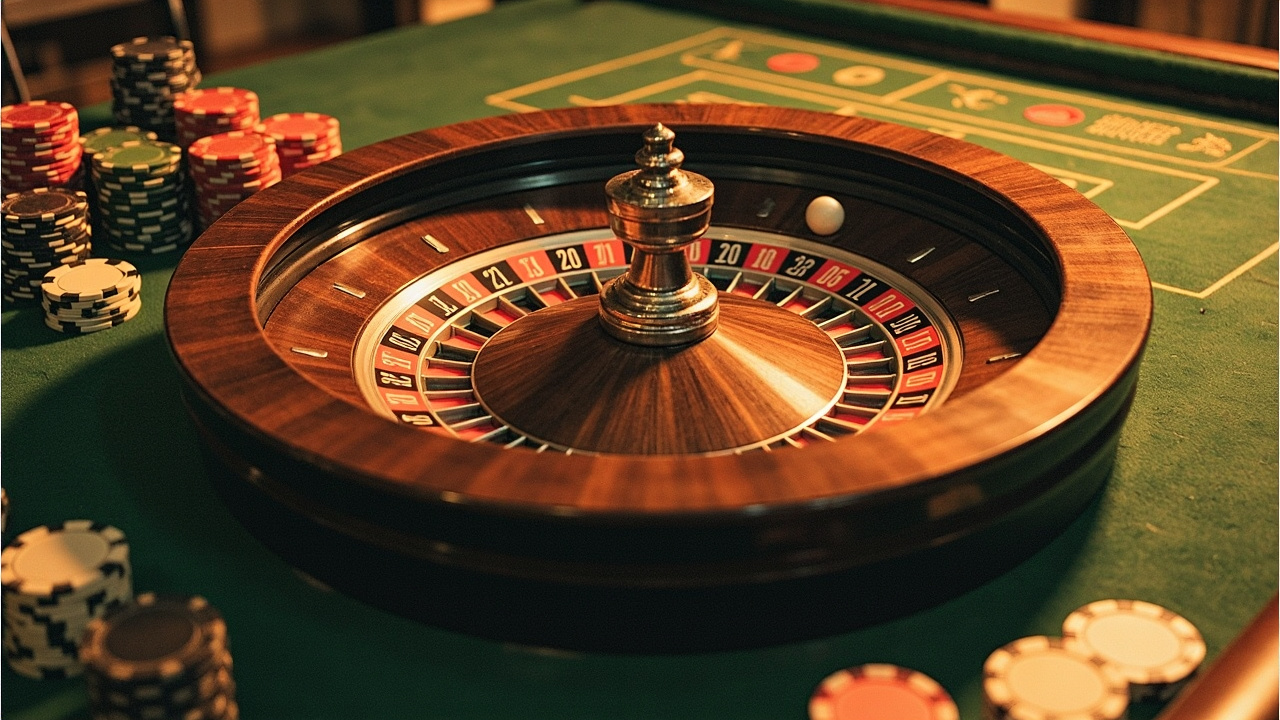
The phrase “European roulette strategy” can describe two things: a disciplined framework for deciding what to bet, and a staking plan intended to manage money. In practice, the better framework starts with mechanics. A European roulette wheel has 37 pockets numbered 0-36, with only one green zero. That structure gives it a lower house edge than the American version, which has 38 pockets because it includes a double zero.
The main comparison is available in this European vs. American guide. The relevant point is not that one wheel guarantees better results, but that identical bets carry different mathematical costs. On a European wheel, the standard house edge for an even-money bet is 2.70%, calculated as 1 divided by 37. On an American wheel, it rises to about 5.26%, calculated as 2 divided by 38.
This difference affects every later decision. A staking method can control how much is lost per spin and how long a session lasts, but it cannot remove the casino’s mathematical advantage. The practical objective is therefore not guaranteed profit. It is to choose a wager that matches your risk tolerance, limit exposure, and avoid confusing short-term outcomes with evidence that a system works.
A sound European roulette strategy also distinguishes between bet types. Straight-up bets pay 35 to 1, split bets pay 17 to 1, street bets pay 11 to 1, and even-money wagers pay 1 to 1. The payout compensates for the lower probability of landing. Higher payouts mean fewer winning outcomes, not a change in the underlying house edge.
The Mechanics Behind a European Roulette Strategy
A useful European roulette strategy needs a repeatable decision process. That process should specify the information used, the permitted bets, the amount risked, and the condition for stopping. Without those elements, “strategy” often becomes an improvised reaction to previous spins.
Wheel Structure and House Edge
The single-zero wheel is the foundation of any European roulette strategy. Because there are 37 equally likely pockets, every bet has a defined probability and payout. For example, a red bet covers 18 numbers. It wins on 18 of 37 outcomes, loses on 18, and loses on zero. Its expected loss remains 2.70% of the original stake over enough repetitions.
This explains why roulette systems based on patterns have a built-in weakness. Red and black can produce long alternating sequences, and numbers can appear in numerical order across separate spins because each result is independent. A streak may suggest a visual pattern, but it does not alter the next spin’s probability. The correct question is not “What will come next?” but “Which wager offers an acceptable combination of probability, payout, and exposure?”
Bet type should therefore be selected before stake size. If the strategy relies on small, frequent even-money bets, its session will last longer and produce more frequent decisions. If it uses straight-up numbers, each decision has a much lower hit rate. A method that works mathematically with one bet may become impractical when transferred to another.
Bet Selection and Decision Rules
European roulette strategy selection comes down to three criteria: house edge, volatility, and consistency. House edge is the fixed mathematical cost. Volatility describes how irregular results feel: even-money bets produce frequent wins but smaller gains, while straight-up bets produce rare wins and larger losses when they hit. Consistency matters because the same wager repeated many times has a lower chance of producing a large deviation than a small number of high-variance bets.
Some players use betting systems such as the Martingale, Fibonacci, or negative progression. These change the sequence of stakes, not the house edge. Martingale doubles after a loss to recover the previous stake when a win arrives. The danger is that a long losing sequence requires substantial bankroll and can produce a loss far larger than the original plan. Fibonacci increases stakes more gradually, but the same eventual concern applies: no finite staking sequence guarantees that a recovery bet will arrive.
A more controlled approach is to fix the wager type and use a flat stake. This may appear unsophisticated, yet it makes the strategy transparent. For example, a player might wager 2% of the session bankroll on red or black, record every result, and stop after a predetermined number of spins. The advantage is not superior returns. It is that the bankroll requirement, expected rate of loss, and decision boundaries are explicit.
Any system requiring an impractical bankroll should be rejected. A Martingale can theoretically recover earlier losses after a win, but a sequence of 10 consecutive losses would demand 1,023 times the initial stake, before accounting for previous profits. That is rarely compatible with a fixed gambling budget. Progressive systems should therefore be assessed through required bankroll, maximum exposure, and session duration – not through stories of successful recoveries.
Bankroll, Limits, and Session Control
Bankroll is the amount reserved specifically for roulette. In practice, separating it from everyday money reduces the risk that a losing session forces additional deposits. The bankroll should also be divided into individual stakes. If a player has 100 units and risks 2% per spin, the initial stake is 2 units. After a loss, the next wager remains 2 units unless a predetermined progression explicitly changes it.
A stop-loss limit and a win limit serve different purposes. The stop-loss limit ends the session after a specified loss, preventing emotional continuation. The win limit can end the session after a specified profit, protecting gains from being handed back through continued play. Time limits provide another useful boundary, because losses and results arrive at different rates depending on the bet type.
Record keeping helps test whether a strategy is being followed. A simple log can include the wager, stake, result, and running balance. Over time, this shows whether the actual behaviour matches the plan. It can also reveal hidden costs, such as changing bet sizes after losses or extending a session beyond its intended limit.
| Decision criterion | What to check | Practical implication |
|---|---|---|
| Wheel structure | One zero and 37 pockets | Expect a 2.70% house edge on standard even-money bets |
| Bet volatility | Frequency and size of wins | Choose frequent bets for longer sessions or rare bets for sharper outcomes |
| Bankroll requirement | Funds needed for the full stake sequence | Reject progressions that require unrealistic capital |
| Session rules | Loss limit, profit limit, and duration | Stop automatically rather than deciding while emotionally invested |
| Result tracking | Stakes, outcomes, and running balance | Verify that the strategy is actually being followed |
Choosing an European Roulette Strategy That Fits
The best fit is the one that remains workable under the player’s actual constraints. A conservative approach uses even-money wagers with flat stakes and short, clearly defined sessions. It does not remove the house edge, but it limits how quickly money is exposed and reduces the effect of emotional bet sizing.
A higher-variance approach uses fewer, larger bets. This may suit someone who prefers a longer session with fewer decisions, but it requires a larger bankroll and greater tolerance for substantial losses. A progressive betting system adds another layer: it seeks to recover accumulated losses through larger stakes. That can increase both required capital and the maximum possible drawdown.
Before playing, answer several questions. What percentage of disposable funds is genuinely available? How long is the intended session? Which bet types can be repeated without changing the plan? What loss ends the session? Is the strategy understandable after a losing sequence? If the answer to any point depends on hope, a larger deposit, or borrowing, the plan is not practical.
For example, someone with a modest bankroll might choose a flat 1% wager, a 50-spin session, and a 10% stop-loss. This creates a maximum planned exposure of 50% of the bankroll before early stopping, while preserving the remaining balance. Someone using a negative progression should calculate the stake required after several consecutive losses and compare it with the available bankroll before starting.
A European roulette strategy works best as a risk-control framework rather than a prediction tool. The wheel’s probabilities do not change, but disciplined limits can make behaviour more consistent and keep a session from drifting beyond its intended scope. If the goal is sustained play rather than a one-off result, start with flat stakes, record the sequence, and judge the method by whether it can be followed – not by whether a short winning streak proves it effective.